%20copy.png)
A Life Built on the Ice: How Skating Shaped Ashley Korn’s Path
Interview by Holly Arend | December 9, 2025

Before she ever took a single step, Ashley Korn was already laced into skates, gliding across the floor of her family’s home. “I actually still have those first skates on display in my room,” she says. Skating wasn’t just something to try; it was embedded in her from the very start. Her earliest memories don’t center on lessons or competitions but on the rink itself, the place she grew up calling second home. “My mom would drop me off at the rink after school, not at home. Being there was just part of my routine.”
Growing up in a family rooted in skating came with unique pressures. Korn admits she often created pressure for herself. “I was a dedicated people pleaser. Of course, I wanted to be a good representation of my parents on the ice, especially my mom. But she never really set that expectation for me.” Her mom took a measured approach. “She coached me at times, but mostly she let me just be, so I wouldn’t feel that pressure. That way, she also avoided assumptions about favoritism.”
Korn’s early relationship with the sport was shaped through repetition and structure. Early on, the sport wasn’t always glamorous. “I hated competing,” she says bluntly. “Competition was the worst part, but I loved the process, the work, the practice, the day-in and day-out effort.” She knew that practice, though mundane at times, was the thing that made everything happen. “There’s always a reason behind every exercise or drill my parents put us through. Knowing that made it easier to stay focused.”
A defining part of her childhood came from the small-town rink culture her parents built. For a sport as niche as synchronized skating, especially in a rural, agriculture-driven Ohio town, this was no small feat. Her parents’ passion created a community hub where ice time was sacred and dedication contagious. “People don’t usually play hockey or figure skate in farmland towns like ours,” she says. “But through their dedication, my parents got the university and the city to care about skating and hockey and that’s huge. They poured their heart and soul into making that happen.”
Their consistent support helped establish a local skating identity that reached beyond their family. “It showed me that when you truly care about something, other people pick up on that. People show up because they know someone else cares enough.” It set a tone that would carry through her entire career, a belief in commitment, community, and purpose beyond trophies.
College introduced a new environment and new expectations. Going to Miami University was like stepping into a bigger world of synchronized skating but entering a larger skating world while navigating her family’s legacy. Being the coach’s daughter came with its own invisible weight. “I wasn’t the best skater, by any means, and sometimes that made navigating relationships a little tricky,” she says honestly. “Plus, the judging panel was always watching, which added pressure I didn’t always say out loud but definitely felt.”

Korn’s mother, as the head coach, took a back seat with her to help ease off any unwarranted pressure, letting other coaches handle critiques or improvements, while giving Ashley room to grow. “She wanted me to be myself,” Ashley reflects. That support made a world of difference, especially in the team environment of collegiate synchro skating.
Relationships were central to her college experience. “I hated skating alone. I’ve always been a team person to the core.” Synchronized skating satisfied that desire, blending the individual’s effort into a collective rhythm. “From the very beginning, I knew this was my path in the sport.” That path was built on shared practices, endless repetition, and adapting to what the team needed.
The Miami synchro program prides itself on its tight-knit culture, the kind of culture that carries you through the demanding seasons and the ups and downs of competition. “More than the medals, what really sticks with me are the relationships,” she says with a smile. “Finding your people who care as deeply as you do. Those moments become the foundation.”
Those moments took on extra meaning when Korn's mom called the shots from the bench. The pressure wasn’t just internal; she knew others watched for signs of privilege or favoritism. “But I just tried to focus on my role and be authentic in my leadership opportunities.” The team culture was one of autonomy and student leadership, which helped her carve her own voice.
One of the most personal memories is from a Nationals-winning year where the team skated to a Beatles medley, the music choice coming from her mom before she passed away. “We never told anyone she was the one who suggested it, but for us, that performance was a tribute.” Winning that year was less about the trophy and more about honoring a legacy, a bittersweet moment etched into the team’s history and her heart.
Mentorship was and continues to be a major part of Korn’s story. She speaks warmly of coaches and leaders who influenced her approach, not only in skating but in life and leadership. From learning the value of failure through optimistic coaching to quiet but firm leadership, these lessons shape how she coaches now. “I learned to push creativity, honesty, and always put athletes first.”

After hanging up her competitive skates, she transitioned seamlessly into coaching. She’s now been coaching at Michigan for nearly 12 years, guiding the next generation of synchronized skaters. But Korn is quick to point out that coaching is more than just a job; it’s a passion she guards carefully. “I never want coaching to become my entire identity or something that drains me. I’ve always treated it as my side hustle, a way to stay connected and give back.”
That mindset informs everything she does on and off the ice. She is as focused on the personal development of her athletes as she is on winning competitions. “It’s about building a culture that supports growth, both on the ice and in life.” Her leadership style reflects the influences from her mentors, embracing failure as a lesson, pushing boundaries with creativity, and always prioritizing the athlete’s well-being.
The Michigan synchronized skating program is steeped in history, and she respects that legacy deeply. “The Hockettes aren’t just a name. We embody a tradition and an image of excellence.” That image carries weight for the athletes and the community but also comes with the responsibility of innovation and evolution. Korn embraces both. “Our goal is to stay at the top of the sport while making sure the experience is sustainable and meaningful for the athletes.”
photos provided by Ashley Korn photos provided by Ashley Korn photos provided by Ashley Korn
She takes pride in the autonomy her team enjoys as a student-run organization. “The athletes are involved in almost everything, from operations to decisions about the team’s direction.” This homegrown investment fosters resilience and ownership, qualities she believes are vital in sport and in life.
One of the toughest moments was when her mother retired just before her senior year. “I wavered over whether to return for that final year, but ultimately, I knew I had to skate it for myself and my teammates.” That decision speaks volumes about Ashley’s commitment, rooted in loyalty, passion, and a love for the game and the people who make it special.
Looking back, Korn’s journey is framed by more than the competitions or titles. “It’s about relationships, legacy, resilience, and representing something bigger than yourself. Those are the lessons I want to pass on.”
Her approach to coaching and life is deeply shaped by the lessons of resilience she learned as a skater. “I want my athletes to grow every single day at practice, doing one thing better than the session before. Growth, not perfection. That mindset applies on and off the ice.” She understands that every athlete’s best looks different day to day, and that awareness is key. “Being respectful of that helps me coach with empathy and helps teams build trust.”
Her personal experience as the coach’s kid taught her important lessons she now hands down with care. “I knew I was watched a lot, and sometimes I struggled with that pressure. I try not to let my athletes carry that same weight. My goal is to empower them to be confident yet aware, and most importantly, to uplift each other.”
Korn’s commitment to collegiate skating runs deeper than the ice. She serves as Vice Chair for Collegiate Synchronized Skating and advocates tirelessly for the sport’s growth and accessibility. Having skated and won multiple national championships at Miami, and now coaching at Michigan, she’s seen the sport’s evolution firsthand. “Miami’s program is why collegiate divisions exist as they do today. It created opportunities for athletes to continue skating beyond high school and college.”
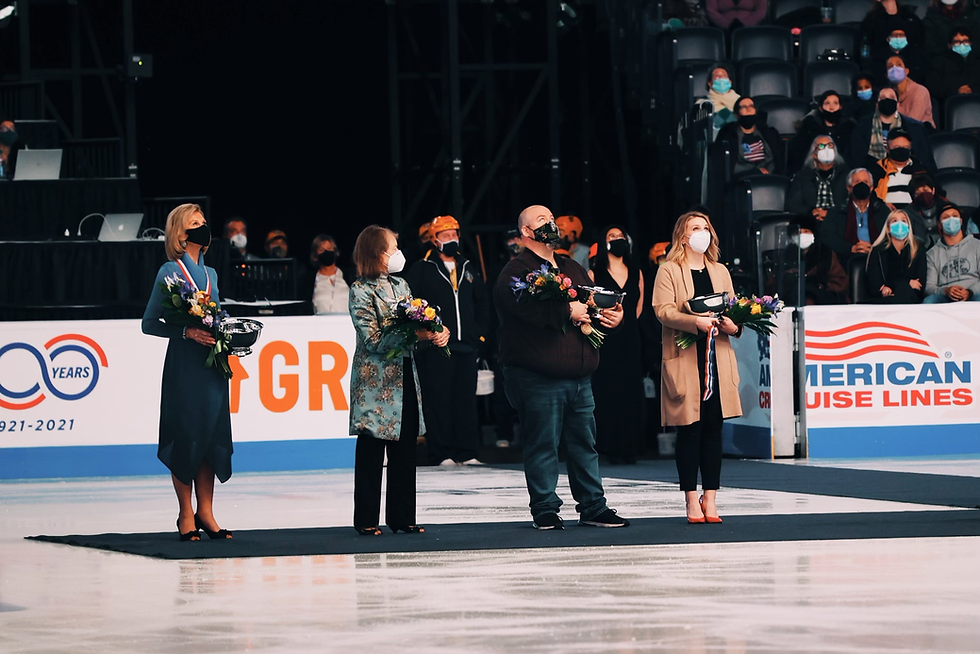
Navigating coaching during times of frustration, like tough Nationals losses, she keeps her perspective. “Last year was rough. The team was dominant all year, but Nationals didn’t go our way. The pressure I felt, even off the ice, was intense. But instead of fixating on what went wrong, we used it as motivation to grow and do better.”
She credits mentorship and collaboration as pillars in her coaching journey. Working alongside iconic coaches like Erin Donovan helped shape her philosophy. “Erin put this program on the map. Watching her passion and care for the athletes inspired me every day.” The loyalty of former athletes returning as coaches, like Marisa Hutchinson, holds the program’s culture strong.
Balance remains a recurring theme for Korn. Juggling her full-time role as Associate Director of the Academic Success Program at Michigan Athletics with head coaching duties demands discipline. But it also shapes her holistic approach to athlete support. “Coaching and academic support complement each other. I want to help athletes succeed in every facet, on the ice and in the classroom, because that’s what prepares them for life beyond sport.”
Ashley Korn knows what it means to carry the weight of a family legacy and a sport’s history on her shoulders.


Comments