Apple is More Popular Than Ever. Here’s Why That’s Worrying.
May 8
6 min read
Written by Elliot Heath | May 8, 2026 | Opinion
In the past decade, Apple has cemented itself in modern culture. Features like Airdrop, Apple Pay, and iMessage games have helped distinguish the global tech company from its competitors, leading to increased sales and wide adoption by American youth in particular. Indeed, a Bloomberg survey showed that 79 percent of respondents in the 18-24 age bracket used iPhones, compared to just 13 percent who used smartphones from Samsung, Apple’s biggest rival worldwide.1
With such a prevailing lead, Apple appears to have captured the collective consciousness of Generation Z. The storied debate of Apple versus Samsung phones has reached a clear winner in the United States, and Apple has emerged as a near-unrivalled force as its signature products — the iPhone, MacBook, AirPods, and many more — slowly become the default for young consumers.2
But beneath the tech behemoth’s success lies a slew of serious allegations that continue to tarnish its image.3 Apple has come under fire in recent years for harmful business practices against both workers and consumers.4 5 The Department of Justice (DOJ) filed a lawsuit against the company in March 2024 for violating antitrust laws, alleging monopolistic actions that allow Apple to stifle its competition and drive up prices.6 Although the lawsuit remains ongoing, it speaks to a growing nationwide sentiment many of us have had for years: As Apple’s stranglehold on the industry tightens, the user experience diminishes.7
“The new iOS is like getting a present from the relative who knows you the least,” Sloane Crosley wrote in a piece for Wired, referring to Apple’s most recent software rollout.8 The company also had to suspend an AI tool that summarizes headlines in January 2025 after a host of news organizations criticized it for generating misinformation.9 And a quick perusal through tech-centered Reddit threads over the past few years will show just how frustrated many users have felt with Apple’s trajectory.10
With all the headaches and irritation, it’s time to reconsider our reliance on the tech giant and how we can combat its predatory practices.
Traces of the Apple monopoly start small, but they build up to something much larger. One of the most common gripes from Apple loyalists is that texts from other brands appear green and limit messaging features, which the DOJ lawsuit uses as an example of the company's objectionable business moves.11 Someone using a Samsung phone can still correspond with an iPhone user, but is not able to directly play iMessage games via GamePigeon,12 use the “reply” function to specific messages,13 send Apple Cash,14 or engage with a host of other features that have come to define modern messaging. These inconveniences, however minor, can alienate users of other brands and make it seem as though Apple is the only viable smartphone option.
Green texts are just one in a host of tactics that result in curtailing competition. In the past several years, Apple has designed a sizable line of software to be incompatible with other smartphones.15 The DOJ lawsuit targets the Apple App Store in particular for its monopolistic overreach,16 citing its efforts to prohibit cloud streaming apps and super apps,17 18 both of which are programs that would allow users to conveniently access a range of online services without having to rely on the iOS system.
Super apps, also known as everything apps, are mobile apps that centralize a variety of digital tools to an individual’s account, effectively housing several “mini apps” in one.19WeChat, for example, one of China’s most popular apps, allows users to message, shop online, reserve movie tickets, and play video games all in one place.20 Cloud streaming or gaming apps, alternatively, use an outside server to operate its hardware, which works even when the phone that hosts the app doesn’t have the adequate computing power or storage.21 Essentially, a user can run a complex app with high-powered software, including many video games, on a less complex smartphone because of the remote cloud connection.
Apps with “mini apps” and cloud connections of their own would be a great way to preserve people’s digital lives across different smartphone models while saving money on expensive software and hardware — and for that reason, threaten user reliance on Apple products.
It’s the same pattern with services like the Apple Watch and Apple Wallet. In connecting to an iPhone, Apple bars any smartwatch — that is, a watch that connects to the internet, is able to receive notifications, and tracks user health — made by a third-party software from accessing the full range of features offered by an Apple Watch.22 Similarly, the company blocks any non-Apple digital wallet — a service that centralizes access to credit cards, contacts, and IDs in one place to auto-fill information and keep track of payments — from performing pivotal functions like tap-to-pay and in-app payment, features that would provide healthy competition to Apple’s built-in system and allow users to access their digital wallets regardless of what kind of smartphone they use.23
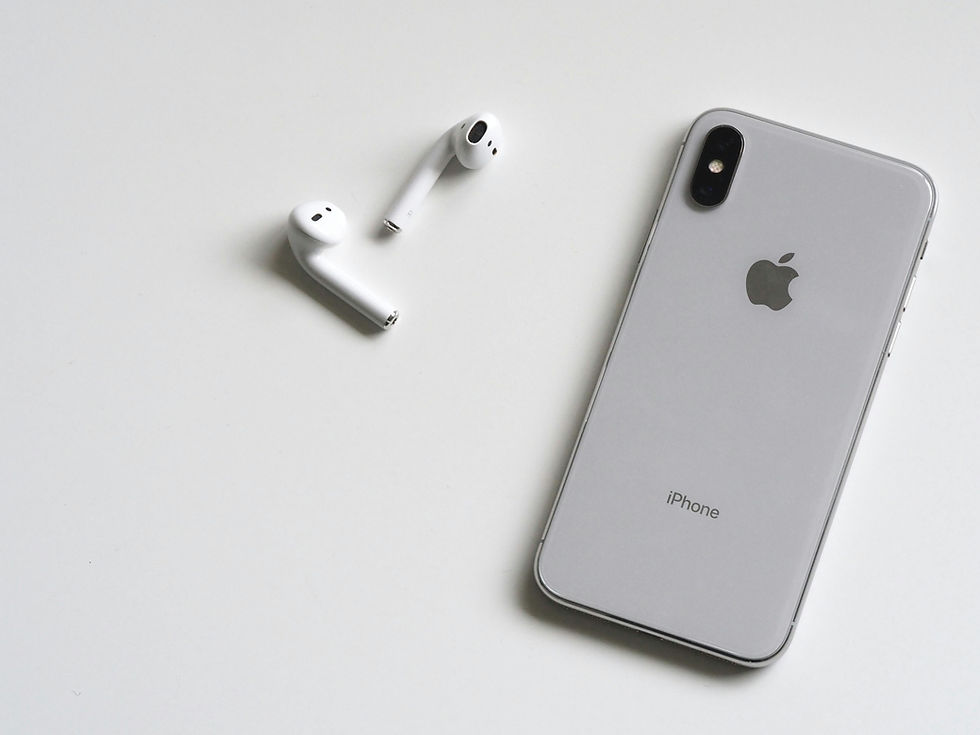
As Apple decisively sweeps its opponents in the American youth market, the company uses the opportunity to do what monopolies do best: cheapen the quality of the product and inflate prices as soon as consumers think they have no other alternatives. Apple famously removed the headphone jack from the iPhone in 2016,24 effectively forcing users to purchase wireless devices like Airpods for listening. The same year, it eliminated all non-USB-C ports from the Macbook,25 which means that tools like flash drives, SD cards, and HDMI cables can’t connect unless through an adapter that has to be bought separately. And as of 2020, iPhone packages now arrive with no complimentary charging block,26 requiring yet another outside purchase from consumers.
While the company’s proponents have claimed such moves serve purposes aside from profit, such as increasing water resistance, optimizing space for other device features, or reducing environmental impact,27 Apple consumers seem to always bear the financial brunt of these decisions rather than the tech giant itself.
All the while, Apple continues to raise prices on the iPhone.28 It is able to do so precisely because of its alleged monopoly over the industry; even while rival brands like Samsung, Google, and Motorola release products with lower costs,29 30 31 Apple’s presence in the American market is so ubiquitous that it can feel as though its competitors hardly matter. Even for buyers who do pay attention to price tags, switching to a cheaper brand when all your devices are from Apple is unfeasible given the iPhone’s incompatibility with non-Apple products.
Perhaps even more sinister are the divisive effects of Apple’s smartphone dominance on our collective culture. A 2025 All About Cookies survey showed that 36 percent of Android user respondents said they have “felt negatively judged” because of their smartphone, while 22 percent of Apple user respondents admitted to thinking less of someone when their text messages appear green.32 These stigmas have even seeped into dating, with 23 percent of iPhone users reporting it would be a “dealbreaker” if a potential partner had a non-Apple phone. While tiny differences in messaging functionality may seem trivial, they add to a growing pileup of factors polarizing American youth,33 eating away at our social fabric.
As the years go on, Apple’s calculated veneer of an in-touch, culturally relevant modern tech company begins to break down, slowly revealing the company’s true colors. A monopoly’s goal, ultimately, is to obtain maximum profit through complete market domination.34 With no viable competitors or government regulation, a company can do nearly anything it wants to achieve that goal, throwing away any notion of consumer satisfaction in the process so long as it provides a product people can’t live without. Apple has not yet gotten to this extreme — but it’s getting closer and closer.
While organizations such as the DOJ have already taken aim at Apple, it is worth considering what young consumers can do at the bottom level. It may be impossible to avoid using Apple products, but organized pressure campaigns, which range from protests and letter-writing to collective outcry via social media, against the company’s domineering practices can still help shift the tides against Apple’s public favorability, forcing it to change its trajectory before it’s too late. And on an interpersonal level, people should not be blaming or stigmatizing other smartphone users for problems that a tech company worth trillions of dollars deliberately put into place — otherwise, we fall into the same pattern that gave Apple so much power in the first place.
In an age where our devices and the tech companies that control them take up so much of our everyday lives, emphasizing our own agency as human beings is more important than ever.
Disclaimer: The views, analysis, and opinions expressed in this op-ed are of the writer. All information is for commentary and informational purposes only and is not intended as legal, professional, or investment advice. References to third-party sources and public figures are made for illustrative purposes and do not imply endorsement or verification by HAZZE MEDIA.
%20copy.png)


Comments