%20copy.png)
Brandon Saho: You Are Not Alone..
10 minutes ago
9 min read
Interview by: Whitney Randall | September 30, 2026
Content warning: This article discusses suicide and may be distressing for some readers. Please take care while reading.

“I got in my truck and I kissed my wife goodbye and my daughter goodbye.”
Brandon Saho received that Instagram dm from a stranger who had reached a point where he planned to take his own life. He had gotten into his truck and was driving to a place where he planned to end his life when YouTube recommended an episode of Saho’s podcast, The Mental Game.
He listened to one episode, then another, and then another.
Eventually, he turned around and drove home. The next morning, he broke down to his wife and told her what had happened.
Soon after, he started therapy.
Saho never knew that his podcast would find someone in their darkest moment and save them from it. But the message showed him something he had begun to understand through the podcast: the conversations he was having could reach people he would never meet, often at moments when they needed them most. “That is when I realized that this could really help people and save lives and it's bigger than any conversation I'm having on the podcast,” Saho said. “ I know that for a fact like I will never get to meet everyone that this has helped and like the same thing for me, so many people inspired stories that inspire me to keep going and want to help other people.”
Saho didn’t start his career planning to have those conversations. He dreamed of working for Entertainment and Sports Programming Network and becoming a sports reporter, spending his career telling other people's stories. As a reporter, he covered athletes and spent time around people competing at the highest levels, but while he was struggling with his own mental health, addiction and suicidal thoughts, something began to change. Some of the athletes he worked with were among the first people to reach out to him during some of his darkest moments. The people he had watched compete, the people others looked up to and the people who appeared to have everything together were struggling too.
That realization became part of what inspired him to create The Mental Game. He wanted athletes, celebrities and other people with platforms to talk about the things that everyone goes through, because he had learned that the things people often keep hidden are the things that can make someone else feel less alone.
“Everyone struggles. It doesn’t matter if you're in Hollywood and movies, if you're working on Wall Street, if you got other things going on in, you know, in your personal life, no matter how famous or not famous you are, we all struggle with the same exact things, and so what I've noticed is just people need to be heard.” Saho said.
Whether he was speaking with someone famous or someone he had never heard of before, Saho found that the need was the same. People wanted to feel seen, heard and understood, and they wanted to know they were not the only ones struggling. He saw the same struggles exist across completely different lives and careers. Seeing that he was not alone had been important in his own journey, and he wanted other people to have known that same feeling.
That feeling of being alone is something Saho understands personally. Growing up, he thought there was something wrong with him because he was emotional, especially as a boy. He had been taught the same lesson many young men hear: hold it in, rub some dirt on it and “be a man.”
When Saho was suicidal, his father told him to “be a fucking man.”
For a long time, he believed that showing emotion meant weakness, and sharing his own struggles felt strange because he had spent so much of his life telling other people's stories.
Eventually, he began to see vulnerability differently.
He wishes young men had been told that it was okay to shed a tear, talk about their feelings, be vulnerable with another man or tell a friend they love them. He now tells the people in his life that he loves them because, as he said, “cause you never know when it's going to be the last time you might see somebody, or how just saying those simple words can help people.”
The more Saho has talked about his own experiences, the more he has realized how much of the stigma surrounding men's mental health comes from the idea that emotions need to be hidden. He said he did not understand the stigma around men's mental health when he first started this work, but the conversations have shown him how important it is for men to hear that vulnerability is not weakness.
For Saho, being vulnerable is a way of connecting with other people and allowing them to know they are not alone.
That realization also changed the way he viewed his relationship with his father. The conversation about being a man was not the end of their relationship, but it became something they could eventually talk about.
Saho began asking his father about his own life, including losing his father at 24, his marriage and his experiences with alcoholism. His father began opening up more, and he began opening up more too. Their relationship became more vulnerable as they worked through things together. He also understands that not everyone will get the response they hope for when they finally decide to open up. The people closest to you may not know what to say, and sometimes difficult conversations can reveal that someone is not willing or able to help. “And that is where I share with people: please find someone who will listen. I promise they're out there,” he said.
For him, the important thing is starting the conversation sooner instead of waiting until someone reaches a breaking point.
Saho believes that kids should be learning about mental health right alongside math, English, and science because if you don't have your mental health, you have nothing. The sooner you start having these conversations, the sooner you can help each other. People who love and care about someone may not always know exactly what to say or how to help, but that does not mean the conversation should not happen.
He saw that same idea in a treatment facility where he spent two weeks.
The people around him came from different backgrounds and different stages of life. They were between 18 and 80 years old, and they were Black, White, Gay, Straight and from different jobs and walks of life. The group looked nothing alike, but Saho realized they shared something important: they did not want to live and they needed help staying alive. Instead of feeling like he was the only person experiencing those thoughts, he began to understand that he was one of many people who had struggled in similar ways.
That experience became part of why he believes so strongly in relatability. Someone does not have to look like you, have the same job or have the same life story to understand what you are going through. Sometimes, simply seeing another person talk about something you thought you were the only one experiencing can be enough to make you realize you are not alone.
For Saho, that was one of the most important lessons he took from being around other people who were struggling.
That has become one of the biggest purposes behind The Mental Game.
Saho has heard from people who said his suicide letter helped them ask for help. He has heard from people who said an episode with only a few views or downloads helped them have a conversation with their wife. He never planned on becoming someone who spoke at schools, companies, teams and conferences, but after being asked to speak at a school in his hometown of Cincinnati, he said he “fell a little bit in love with it.”
In January 2024, he drove to 30 states in 30 days, speaking to people and creating spaces where they could share their stories, be vulnerable and ask for help.
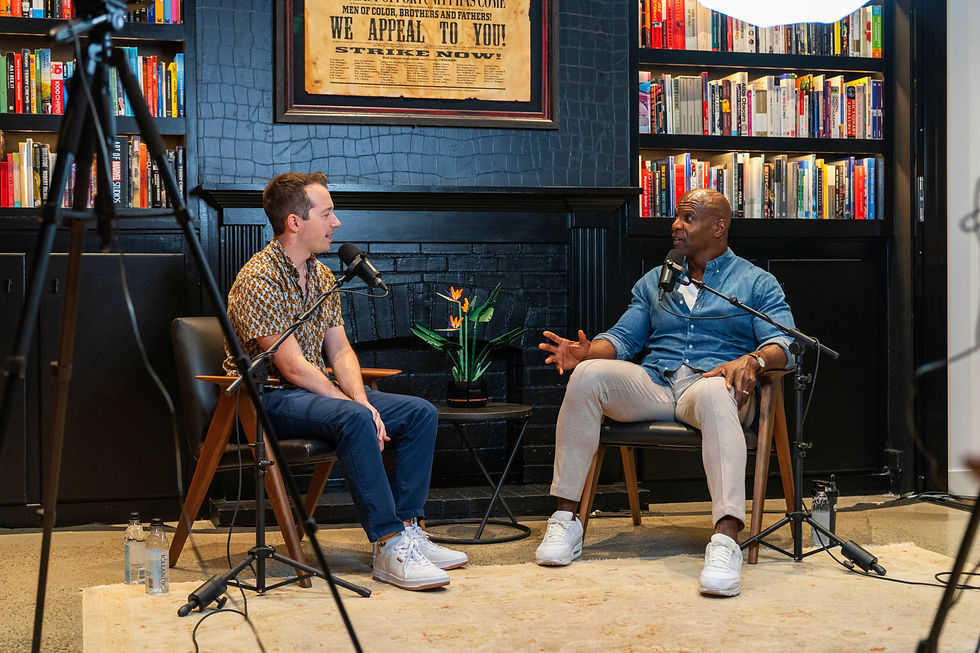
Sometimes people came because they knew he had worked with a favorite National Football League player or because they knew he had sat next to Oprah.
Those moments were exciting, but they weren’t what Saho considered the best part of the job. The best part came when someone stayed afterward to have a conversation. He remembers a high school student who told him about abuse they were experiencing at home and eventually found the courage to tell a counselor and social worker. For him, that moment mattered more than any famous person he had interviewed because it showed what could happen when someone finally felt safe enough to say something out loud.
Those conversations are also where he finds hope. He has had people approach him after speaking events, at basketball games in front of 10,000 people, at a plumber's convention and during teacher professional development days, all saying some version of the same thing: “I’ve never told anyone this before.” Some have told him they are suicidal. Others have needed someone to listen. Those moments break his heart, but they also give him hope because people are willing to ask for help when they feel like they are in a safe space.
Saho cannot answer every message, email or social media DM he receives but when someone walks up to him in person, he makes a point of giving that person his full attention. He wants to give people the same opportunity to feel heard. His mother has also reminded him not to put so much pressure on himself to make every episode or video successful. He does not need every conversation to have thousands of views or downloads to know the work is making a difference.
If one person hears something that helps them ask for help, that matters.
For Saho, connecting with the next generation remains a deeply personal mission.
He focuses intensely on reaching young adults between 14 and 24, a pivotal season filled with huge transitions, identity shifts, and the overwhelming search for belonging.
Through initiatives like Hope Squad, a peer-to-peer suicide prevention program, and open locker room discussions, he has witnessed how peer support opens doors for real vulnerability. He strongly believes that encouraging students and student-athletes to lean on one another can help break the silence, reminding young men that holding their pain inside is never the answer.


Comments