%20copy.png)
From Hits to Canvas: Jacob Trouba Uses Art to Reframe His Story
Aug 8
3 min read
Interview by Holly Arend | August 8 2026

On canvas, Jacob Trouba is not the defenseman known for punishing hits and a hard edge. He is trying to slow things down, hold onto a moment long enough that it means something later.
Trouba said he started painting about three years ago after a friend invited him to a studio, and what began as curiosity became a way to make something outside the pace and pressure of hockey.
At first, he said, it was not about building a public identity.
It was about finding a different kind of room to think in.
“The story kind of connects the art,” Trouba said. “When you see the piece, the background and the story really kind of brings it full circle.”
He described the paintings as a kind of visual journal, a record of what each season of his life felt like at the time.
“I guess these are moments in my life,” he said. “It’s kind of like journaling, I guess, in a way.”
He said he does not always think about preserving a moment while he is painting, but time changes the meaning of the work. What starts as an image becomes a memory, then a marker of where he was emotionally when he made it.
“It’ll always kind of remain as my moment in time,” he said.
That matters because Trouba has also spent much of his career dealing with how other people choose to see him. He said there has long been a focus on his physical style and the opinions that came with it, and that painting gave him a way to respond in his own voice.
“You get put in a box or painted a certain way,” he said. “This was just a way of controlling the narrative.”

For Trouba, that is part of the appeal. He is not just painting. He is complicating the easy version of himself.
“There’s more to people, to athletes, to I guess everyone than just what you see on the surface,” he said. “Dig a little bit deeper, and you’ll find more about people.”
What started privately eventually grew into something more public.
Trouba said he first tried painting something for his son’s room, but the hobby expanded into a broader creative practice.
He and his wife then built the Trouba Creative Expressions Art Program as part of their charitable work, giving adults with epilepsy a chance to create and share art.

The most powerful part, he said, was not the idea on paper but the people standing in front of their own work.
“To see how proud they were to show their work,” he said, “that was more rewarding than I could have thought.”
He said the program also created conversations that made the project feel more personal, especially around epilepsy and shared experience. It became a place where art opened the door to something else, something more human and immediate.
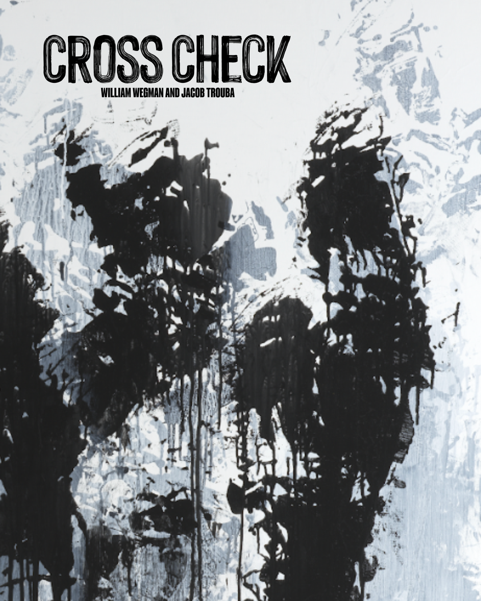
That same idea carried into Trouba’s first public exhibition, “Landing My Mark,” which opened in Manhattan and marked an important step in bringing the work beyond his own studio. The show gave the paintings a larger audience and gave the stories behind them a different kind of life.


Comments